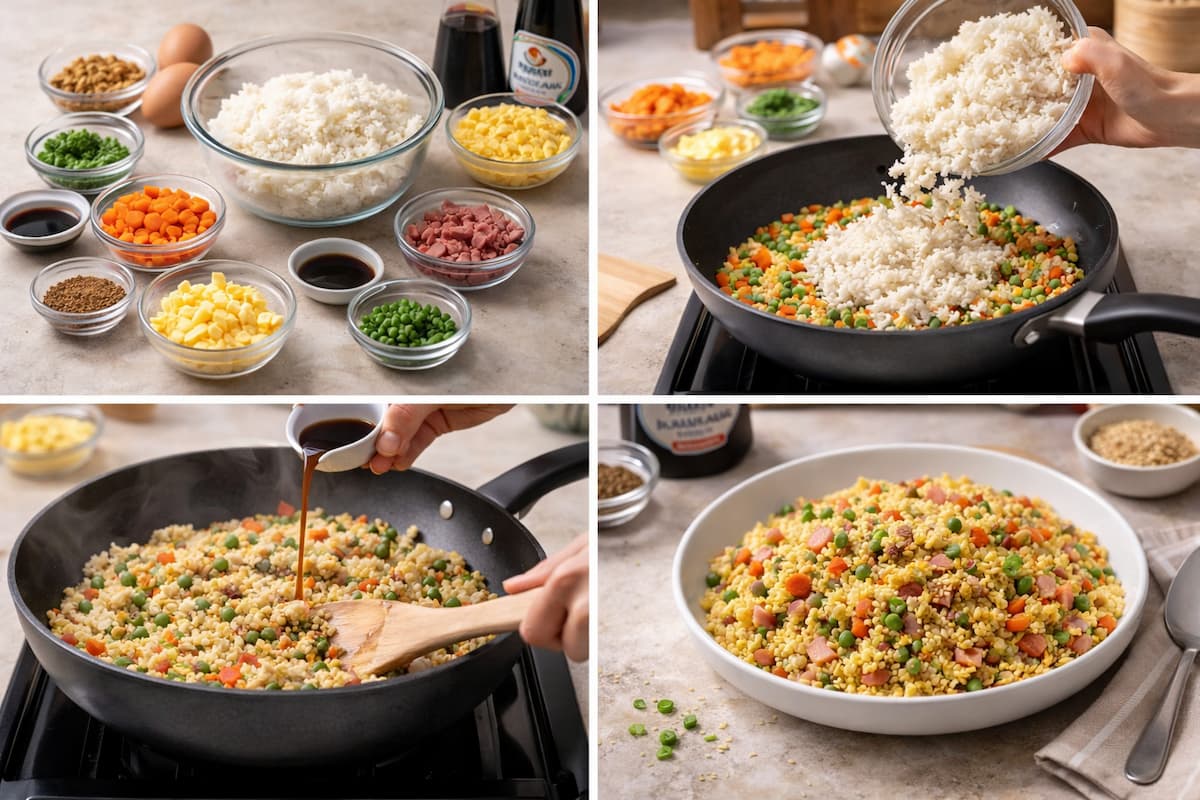
Leftover rice is often considered a problem, but it can actually become the star of a delicious, easy-to-make meal: fried rice. Fried rice is a versatile dish that allows you to use ingredients you already have, minimize food waste, and prepare a satisfying, flavorful lunch or dinner in minutes. With the right technique, leftover rice transforms into a dish that’s crispy, savory, and loaded with flavor. This guide will walk you through step-by-step methods, ingredient ideas, and tips for creating restaurant-quality fried rice at home using ingredients you likely already have in your kitchen.
Why Leftover Rice Works Best
Using leftover rice is crucial for making perfect fried rice. Freshly cooked rice tends to be soft and sticky, which can make fried rice clump together. Leftover rice, having cooled and dried slightly, separates more easily, creating that classic light, fluffy texture that fried rice is known for.
Tips for Using Leftover Rice
- Refrigerate Rice Overnight: Cold rice separates more easily and is less likely to become mushy.
- Break Up Clumps: Use your hands or a fork to break clumps of rice into individual grains.
- Avoid Wet Rice: If your leftover rice is too moist, spread it on a tray and let it air-dry for 15–20 minutes before cooking.
Using properly prepared rice ensures your fried rice has the ideal texture and mouthfeel.
Gather Ingredients for Your Fried Rice
Fried rice is flexible and can be made with whatever ingredients you have on hand. Here’s a basic guide:
Essential Ingredients
- Rice: Leftover cooked rice, preferably cold and separated
- Oil: Vegetable, canola, or sesame oil for frying
- Aromatics: Garlic, onions, and ginger for flavor
- Eggs: Adds protein and a rich, savory layer
- Soy Sauce: For seasoning and color
- Salt and Pepper: To taste
Optional Ingredients
- Vegetables: Carrots, peas, bell peppers, broccoli, or mushrooms
- Protein: Chicken, shrimp, beef, tofu, or leftover cooked meat
- Flavor Boosters: Oyster sauce, fish sauce, sesame oil, or chili sauce
- Garnishes: Green onions, sesame seeds, or cilantro
Having a variety of ingredients on hand allows you to customize fried rice to your taste while using what’s already in your kitchen.
Preparing Ingredients Before Cooking
Preparation is key to making fried rice quickly and efficiently. Mise en place—the culinary practice of preparing everything before cooking—is especially useful here.
Steps for Preparation
- Chop Vegetables: Dice vegetables into small, uniform pieces to ensure even cooking.
- Prepare Protein: Cut cooked chicken, beef, or tofu into bite-sized pieces.
- Beat Eggs: Lightly beat eggs with a pinch of salt for scrambling.
- Measure Sauces: Have soy sauce, sesame oil, or other sauces ready.
By prepping all ingredients before you start cooking, you reduce the risk of overcooking and ensure the rice gets evenly fried.
Heat the Pan Properly
A wok or large skillet is ideal for fried rice, but a regular nonstick pan works as well. The key is using high heat and enough oil to prevent sticking.
Pan Tips
- Use Medium-High Heat: This allows ingredients to fry quickly without steaming.
- Add Oil Gradually: Coat the pan evenly to prevent sticking.
- Preheat the Pan: This ensures the rice cooks properly and develops a slight crisp texture.
Proper pan temperature is essential to achieving fried rice that isn’t soggy.
Cook Aromatics First
Aromatics like garlic, onion, and ginger form the flavor foundation of your fried rice. Cook them briefly in hot oil to release their aroma and flavor.
Steps
- Heat oil in the pan until shimmering.
- Add chopped garlic, onions, and ginger.
- Sauté for 30–60 seconds, stirring constantly to avoid burning.
Aromatic ingredients create a savory base that elevates the flavor of even simple fried rice.
Add Eggs for Protein
Scrambled eggs add texture, color, and protein to your fried rice. They should be cooked briefly before adding rice.
How to Add Eggs
- Push aromatics to one side of the pan.
- Pour beaten eggs into the empty side.
- Stir gently to scramble until just cooked.
The eggs will mix with the rice later, providing a rich, savory component without overwhelming the dish.
Incorporate Rice Gradually
Adding rice gradually ensures even frying and prevents clumping. Use a spatula or wooden spoon to break up clumps and distribute rice evenly.
Tips for Adding Rice
- Start with Cold Rice: Cold, day-old rice works best.
- Add in Batches if Necessary: Avoid overloading the pan, which can cause steaming instead of frying.
- Stir Constantly: Keeps the rice from sticking and ensures even coating with oil and sauces.
Proper handling of rice ensures a light, fluffy fried rice with individual grains.
Mix in Vegetables and Proteins
After the rice is evenly coated and heated, add vegetables and proteins. Stir-fry for a few minutes until they are heated through and tender.
Cooking Tips
- Vegetables: Harder vegetables like carrots and broccoli may need slightly longer cooking. Add them first, then softer vegetables like peas or bell peppers.
- Protein: If using raw meat or shrimp, cook separately first and add later to avoid overcooking.
- Stir Often: Ensures all ingredients cook evenly and flavors blend.
Adding ingredients in stages guarantees that each component maintains its texture and taste.
Season Your Fried Rice
Seasoning is crucial for creating delicious fried rice. Start with soy sauce for salt and umami, and layer additional flavors as desired.
Flavoring Options
- Soy Sauce: Provides saltiness and color
- Sesame Oil: Adds a nutty aroma, best added near the end
- Oyster Sauce or Fish Sauce: Enhances savory depth
- Salt and Pepper: Adjust according to taste
- Chili Sauce or Red Pepper Flakes: For heat if desired
Taste frequently while cooking to ensure the seasoning is balanced. Remember, it’s easier to add more later than to fix an over-seasoned dish.
Create Variations for Fun
Fried rice is highly adaptable. By varying ingredients, you can create multiple versions using leftover rice.
Ideas for Variations
- Vegetable Fried Rice: Use only vegetables, eggs, and soy sauce for a vegetarian option.
- Chicken or Beef Fried Rice: Add diced cooked meat for a hearty meal.
- Shrimp Fried Rice: Quickly cooks shrimp for a seafood twist.
- For a sweet-savory taste, add chunks of pineapple to your pineapple fried rice.
- For a kick, add sriracha or chili paste to your spicy fried rice.
Encourage creativity by experimenting with available ingredients; fried rice is perfect for using leftovers in inventive ways.
Tips for Perfect Fried Rice Every Time
Even simple fried rice requires a few key techniques for perfect results.
Key Tips
- Use Cold, Dry Rice: This prevents sogginess and clumping.
- High Heat: Ensures ingredients fry quickly rather than steam.
- Don’t Overcrowd the Pan: Cook in batches if necessary.
- Add Sauces Gradually: Avoid over-saturating the rice.
- Finish with Aromatics: Fresh green onions or cilantro at the end boosts flavor.
By following these tips, even beginners can make fried rice that rivals restaurant quality.
Serving and Storing Fried Rice
Fried rice is best served hot immediately after cooking, but leftovers can be stored safely.
Serving Suggestions
- Pair fried rice with spring rolls, dumplings, or a side salad.
- Garnish with chopped green onions, sesame seeds, or a drizzle of sesame oil.
Storing Leftovers
- Refrigeration: Store in an airtight container for up to 3 days.
- Freezing: Fried rice freezes well; thaw and reheat in a pan for best results.
- Reheating: Use a pan or wok over medium heat, adding a splash of water or oil to refresh texture.
Having fried rice ready in the fridge is convenient for quick lunches or dinners during a busy week.
Make Fried Rice a Weekly Habit
Fried rice is not only a wonderful way to use leftover rice but also a simple, versatile meal that can be part of your weekly rotation. By prepping vegetables, proteins, and sauces in advance, you can assemble fried rice quickly, making it a go-to solution for busy days. The dish is customizable, budget-friendly, and perfect for reducing food waste, all while being delicious and satisfying.
Conclusion
Using leftover rice to make fried rice is an excellent way to create a flavorful, satisfying, and cost-effective meal. By understanding the importance of cold, dry rice, preparing ingredients in advance, and layering flavors carefully, you can transform simple leftovers into a delicious dish enjoyed by the whole family. Fried rice is versatile, allowing you to experiment with proteins, vegetables, sauces, and spices, making it perfect for beginners or everyday home cooks. With a little creativity and the right techniques, leftover rice becomes a culinary canvas for endless tasty possibilities.
FAQs
1. Can I use freshly cooked rice for fried rice?
Fresh rice can work, but it tends to be sticky. If using fresh rice, spread it on a tray to cool and dry slightly before frying to prevent mushiness.
2. How can I make fried rice healthier?
Use brown rice or mixed grains, add plenty of vegetables, reduce oil, and choose lean proteins.
3. Can fried rice be made vegetarian or vegan?
Yes. Omit eggs and animal proteins, and add tofu, beans, or extra vegetables. Use soy sauce or tamari for seasoning.
4. How do I store leftover fried rice?
Store in an airtight container in the fridge for up to 3 days or freeze in individual portions for up to a month. Reheat in a pan or microwave.
5. How do I get restaurant-style texture?
Use cold, dry leftover rice and high heat, and don’t overcrowd the pan. Stir constantly to allow each grain to fry slightly for a light, fluffy texture.